Tuesday, 15 March 2011

Build A Rocket Boys!- Elbow


Brace for landing: Guy Garvey and co have made their masterpiece

As tradition dictates, every generation needs an album to soundtrack it. You can go right back to the free love of 1967 and Sgt Pepper. 70s industrial strikes? Sex Pistols and Never Mind The Bollocks. 80s Thatcherite gloom? Where’s my copy of The Smiths’ The Queen Is Dead?

Step forward Elbow, proverbial “band-of-the-people” after the huge success of 2008’s Seldom Seen Kid. It was a fine album with telly’s ubiquitous anthem of choice One Day Like This among its riches. The stage is set for its grand follow-up: either an album aiming for stadiums, or their career-destroying Kid A moment.

Build A Rocket Boys! (their exclamation mark, not mine) is neither of these beasts, and thank goodness for that. What we have here is a distillation of everything that has been so great about Elbow over four albums: Guy Garvey’s down-to-earth and perfect songwriting; a sweeping, uplifting tone set against a monochrome background; and a dedication to not always doing it the easy way. It’s genuinely, without hyperbole, a masterpiece.

Opener The Birds is the ultimate scene-setter: not opting to push for epic grandstanding, it instead starts quiet, moody and shuffling, with Guy Garvey muttering about birds being “the keepers of our secrets”. This almost paranoid beginning flowers like the springtime he sings of, built around a looping acoustic guitar line. Eight minutes long but feeling like half that, it then explodes into warm bleeps and bloops and surging strings, before Garvey’s emotional, rich voice takes full flight.

It serves to highlight how far they’ve come as songwriters, a skill of theirs that hardly needed refining. Lippy Kids is by far Garvey’s greatest lyric, singing of the title characters “on the corner again”. In interviews, Garvey has said that he was put in reflective mood after moving home in the midst of writing this album, and it shows, looking back on his own experiences: “I never perfected that simian stroll.” When he sings “Do they know those days are golden?” it’s not with cynicism, but a show of support for this country’s youth against their detractors.

Elsewhere, Jesus Is A Rochdale Girl finds Garvey whispering in your ear, finding solace in “nothing to proud of, nothing to regret” as the album’s greatest addition to the mix bring in a new layer: keyboards. Craig Potter has always been there, but here he’s thrust forward, bringing prominent warmth to every track, and spine tingling piano to Neat Little Rows. The River and Open Arms are anthems for lost souls, the latter with choir keeping a door open should a friend return: “open arms for broken hearts like yours my boy, come home again.” Dear Friends is a powerful and tear-jerking finale, quietly finding solace in those around us, the band provide a big musical hug.

For the sake of reader sanity, that is where I will stop. But one could very easily dissect what’s wonderful about every single track. For those who still love their albums as single, whole works, BARB! is a wet dream. It’s exactly the album this country needs, searching through the bleak darkness for glimmers of optimism. Thank whoever you pray to for Elbow, the world can rest easier with them here.

5/5

Best Tracks:
Lippy Kids
The Birds
Dear Friends
Open Arms
Jesus Is A Rochdale Girl

Tuesday, 8 March 2011

Yuck- Yuck


Promising debut from shoegaze/grunge revivalists

Cajun Dance Party was one of THOSE bands. You know the type. Every now and then music publications tell you which indie bands will dominate the next few years’ landscape. Like Joe Lean And The Jing Jang Jong (remember them?) from the same sort of time, CDP never quite built on the fuss and threw it away.

From their ashes rise Daniel Blomberg and Max Bloom. They're throwing more straight-forward shapes in new band Yuck- great name with a nice little line in fuzzy, scuzzy indie, with the noise-love of Sonic Youth crossed with the melodies of Mazzy Star, and other grunge also-rans from the 90s.

It’s hardly a new proposition, and it has already been done far better, frankly. However, there’s enough verve and a few pop hooks on show here to create an enjoyable, if forgettable, first album stab.

Underneath the layers of distortion lies some great guitar work. Bloom and Blomberg make the instruments squeal and squall on The Wall, and the subtle acoustic lines that support Shook Down (as well as the rather lovely vocals) wouldn’t sound out of place on this year’s hip indie film soundtrack. Rhythm support from bassist Mariko Doi and drummer Jonny Rogoff do the job further down in the mix, but they hardly stand out.

Quieter tracks like Suicide Policeman and Sunday are a nice distraction, showing range and a degree of songwriting nous (“I just want to let you know/I could be your suicide policeman” is like a big man hug). In other moments, tracks like Georgia and Stutter show off another early-90s love of Yuck’s: shoegaze. It’s nice but, once again, Yuck are a little late to the party and it just puts better examples like Girls in mind. Yuck really work when they bring the rock.

This is found in abundance on The Wall and Holing Out- wonderful and slightly complex grunge at its best. Top of the pile though has to be closing track Rubber. With distorted vocals and an element of melody lurking beneath a wall of noise, its seven minutes build and build to a cacophony of sound cascading to the song’s climax. It’s their most Sonic Youth moment and it really shines.

Yuck isn’t an album that’s going to change the world, and it’s a revival movement that has been explored many times before. Despite this, the London quartet’s debut is fun and perfectly serviceable. Just don’t go in expecting fireworks.

3/5

Best Tracks:
Rubber
The Wall
Suicide Policeman

Friday, 4 March 2011

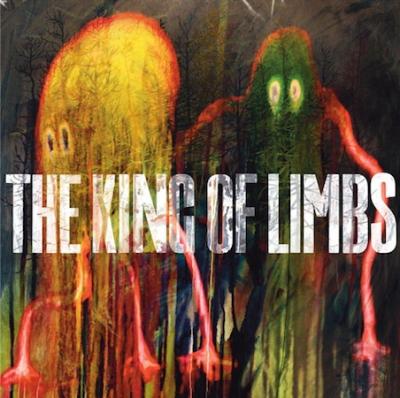
Radiohead- The King Of Limbs


Is it another masterpiece for the Oxford quintet? Almost...


Well wasn’t that fun? Yes, two weeks ago The Most Important Band In The World (TM) struck again, suddenly announcing the release of their new album, and then releasing it a day early for no good reason other than boredom it seems.

King Of Limbs follows the path of unconventional releases pioneered with Radiohead's previous album- 2008’s In Rainbows. Like that record, it has taken time for the fuss around the surprise to die down, allowing sole focus on the music. King Of Limbs also has the problem of following a genuine masterpiece: In Rainbows marked the point where Thom Yorke and co stopped trying to be machines, and invested in a little human emotion.

Unsurprisingly, this new album doesn’t quite live up to this billing. It’s not a huge step forward sonically- King Of Limbs for once is an exercise of evolution over revolution. It takes many of the ideas found on In Rainbows and develops them into new shapes. In many ways this is similar to what Amnesiac did with Kid A.

What is first noticeable is the absence of Johnny Greenwood’s guitar, an instrument having a renaissance on the last two records- his acoustic work on tracks like Faust Arp being a particular high. Here he’s only really heard front-and-centre on the scattered funk of Morning Mr Magpie, and minor acoustic flourishes on Little By Little and Give Up The Ghost. Even then, he can be tough to spot.

And this represents the only real problem with King Of Limbs: it doesn’t feel like a full-band effort. The man in control is clearly Thom Yorke, and it feels more like a solo piece by him. Feral, for instance, locates Radhiohead taking dubstep elements pioneered by Mr Yorke on his Eraser album. The album as a whole also shies away from more emotional lyrics, back into the absurd and cryptic (closer Separator finds Yorke claiming to be a fish now, for instance).

Two instruments work wonderfully though: Philip Selway’s avant-garde drumming is fresh and exciting, even on the quieter tracks. There’s also some of the band’s most beautiful piano work. Codex takes the framework of Pyramid Song from Amnesiac. It’s utterly involving yet ethereal and other-worldly at the same time. It’s this mood that dominates across the final three tracks. Separator, in particular, carries an almost positive sound not usually associated with Radiohead. Don’t let anyone label them miserablists.

There are other strengths: the spine-shivering brass that descends over Bloom is perfectly judged on a track that starts off a little muddled. It’s also unsurprising that Lotus Flower was the first “single” from King Of Limbs as it’s the only song to feature anything coming close to a chorus. It’s a chorus that soars, Thom Yorke’s sweet falsetto sitting atop a lolloping bassline.

If any other band released this album, it would be declared their masterpiece, and on first listen it carries that feeling. But as you live with the record, a slight sense of dissatisfaction creeps in: you’re left wondering how they took three years to create these 8 tracks- they’ve made better albums. This is a great Radiohead album- just not a life-changing one.

4/5

Best Tracks:
Codex
Seperator
Lotus Flower
Feral

Friday, 11 February 2011

James Blake- James Blake


Extraordinary debut from minimalist mystery man as the post-dubstep era begins

We live in a musical era of bigness: be it the seemingly-endless scale of Muse, or the complex pop of mainstream artists like Lady Gaga. But a quieter way of life is slowly breaking through. Witness last year’s XX Mercury win, and now the critical whispers around James Blake.

What the world knows about him could be written on the back of a 5p piece. He was born in London, he went to Goldsmith’s and he’s 21. But after a short stint as an electronica producer on several heralded EPs, he’s put his own voice down (even if auto-tuned in a Bon Iver sort-of-way) over delicate piano lines, with XX-style delicacy, and whoomping dubstep basslines. Lo-fi doesn’t even begin to cover it.

More than anything though, the spaces on a record have never felt quite so important. There’s one song in particular here, Lindesfarne I, that strips it right down to his emotional vocals (falsetto and filled with sadness, winning comparisons to Jeff Buckley). On top of this whole seconds are left silent. It’s a brave decision that works on an enormously brave debut.

So those expecting 11 tracks like his haunting cover of Feist’s Limit To Your Love that hit the charts earlier in the year may be slightly confused. The rest of the album carries that track’s dislike for flourishes, but first listen will lead you to check that the music player isn’t broken. To start with it feels a very cold record, but after a few listens it will burrow deep beneath your skin and stay there.

It always goes back to the voice: rarely unaffected, but it makes it all the more special when heard in naked form. Piano playing on tracks like Give Me My Month and Why Don’t You Call Me are exceptional.

Words don’t often make an appearance either. This works to astounding effect on I Never Learnt To Share: “My brother and sister don’t speak to me/But I don’t blame them.” That’s it. No explanation, no insight, just those words over and over. It’s a phrase that haunts, and it’s all the more powerful just as it is.

Power also lies on the aforementioned Lindesfarne I, before it brings in quietly plucked guitar to flesh it out on Lindesfarne II. I Mind is perhaps a step too far: simple vocal vowels over a slim piano coda, skipping and jumping all over the place. It sounds like a seriously fucked up vocal warm up. It comes to a beautiful conclusion as Blake endlessly multi-tracks himself for a homemade gospel choir on Measurements. He ebbs and flows through the track, never unmasking fully, but it’s the closest to a big production number, even though it clearly isn’t when you consider it.

Be warned: this is not an easy, immediate listening experience. When so many are after instant gratification, James Blake should be commended for making the audience work a little. Despite this, those who prefer their minimal electronica more straightforward to digest should probably wait for Jamie Woon later in the year.

4/5

Best Tracks:
Measurements
Lindesfarne I
I Never Learnt To Share
Give Me My Month

Thursday, 10 February 2011

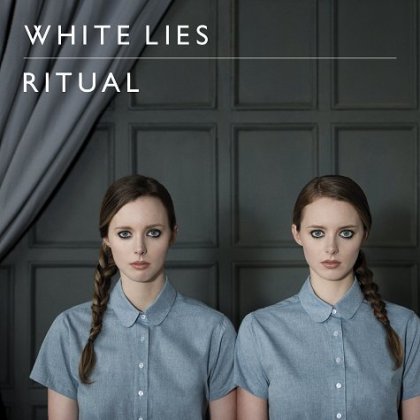
Ritual- White Lies


Bigger doesn’t always mean better for Ealing miserablists

The emergence of White Lies’ Joy Division-owing gloom was hardly original in 2009. Interpol and Editors had it well covered. But debut album To Lose My Life...’s surprise stint at number one showed that there was something fresh and new about them, something you couldn’t quite put your finger on.

It was a great album filled with memorable hooks and eccentric optimism against the doom. Now they’re back and have done it all over again: just much, much bigger. This leaves a mixed bag.
At times on second album Ritual, they resemble a Ferrari without any wheels. It’s an impressive noise, but there isn’t really much point if it doesn’t move anywhere. Editors suffered a similar fate when they brought in the synths and stadium-aim, and lost something in the process. As well as borrowing their sound, White Lies seem to be on a similar trajectory.

First single Bigger Than Us is a perfect example of this, heavy on grandstanding, whooshing synths and gleaming production. Here it works. But while it shows them focused and onto something that works for them, but it’s a formula they too often stick to.

Opener Is Love is one of the exceptions. As well as the huge McVeigh vocals and swirling guitars, they also frequently stab violently, with a gleeful funk breakdown in the middle. For five minutes, the forward momentum is relentless and genuinely exciting. Ritual’s quality dips in the very next song, Stranger, which is filled with statements like “I’ve got a sense of urgency” and “I’ve got to make this happen” without actually achieving it.

And this is the main problem: it’s a wildly inconsistent record. To Lose My Life... was great for its song writing. Death was a tangible take on fear of flying, and Farewell To The Fairground was a living, breathing nightmare. Only occasional moments of “guilt smeared across your lips” show off the same skill here, and it never manages it for an entire song.

The initial thrill at the size of the beast soon wears off. Unsurprisingly, it’s the more Earth-based moments that stand out. The Power & The Glory still manages to be an epic, but in a more subtle and subdued way, with a backing guitar screech and late-night, skittering percussion. This brings relief from stadium-bait like Holy Ghost and ironically-titled Peace & Quiet. Hushed moments aren’t going to sell records, but they work in White Lies’ favour.

Individual tracks won’t stay with you, neither is the overall feel of the record. What they have got is singer Harry McVeigh. He carries far more detached power than his contempories, but let’s hope on record three they invest a little more human emotion, and remember why they so great to start with.

3/5

Best Tracks:
Is Love
The Power & The Glory
Bigger Than Us

Friday, 4 February 2011

The Joy Formidable, February 1 2011, Bournemouth Old Firestation


Welsh trio bring a riot to the south coast. What rock crisis?


For indie and rock fans of a more mainstream bent, the start of 2011 was overwhelmingly depressing. Very few “proper” rock albums finding a release, Mumford & Sons the only so-called “rock band” in the end of year charts (despite them releasing their album in 2009 and, yknow, being a folk band)- the future looks grim.

So it’s easy to see why The Joy Formidable’s album The Big Roar has been feted so. But far from failing to live up to the hype, their riotous show makes every ounce of it justified. Rather than come out all-guns-blazing, Ritzy Bryan and co build up with seven-minute album opener “Everching Spectrum of a Lie”, just as effective live.

From here, TJF are playing at hurricane force. Ritzy, pixie-like with blonde bob bouncing everywhere, controls it beautifully. After every earthquake riff and solo, she responds with a huge grin. That’s what’s so great about them: they’re here to remind people that music is meant to be fun, and we need that right now.

The cold venue is warmed fast by a responsive crowd, with tracks like “Heavy Abacus”, “Buoy” and “cradle” set off the moshers, all pawing for Bryan’s tiny frame. Every song is like a set climax- not always a good thing, as the set hardly flows. But by the time explosive closer “Whirring” comes around, this just doesn’t matter. Tell the world: rock music is back...

Sunday, 30 January 2011

The Joy Formidable- The Big Roar


Loudest riot out of Wales since the miners’ strikes

It doesn’t take me to tell you what a state British rock and indie are in right now. Last year’s end-of-year sales charts showed only one album from either genre in the top 20 (the distinctly folk-flavored Mumford & Sons, whose album was released in 2009 anyway). Though of COURSE no one does it for the fame, it’s still a worrying trend that shows the mainstream just isn’t listening.

One band hoping to break the deadlock is North Wales’ The Joy Formidable, consisting perma-blonde-bobbed Ritzy Bryan, her boyfriend bassist Rhydian Dafydd and drummer Matt Thomas. Since the release of their first bombastic single Cradle in 2008, they’ve at times found themselves unsure of their identity. On their major label debut The Big Roar they’ve found it: and boy, it’s something.

Press around the album has rather lazily labeled it as Celebrity Skin-era Hole, probably because of The Joy Formidable’s bolshie blonde front woman. Whilst there are hints of Courtney Love in the mix, really the spirit is closer to early Feeder (albeit more authentic), or last year’s Dinosaur Pile-Up’s version of hard grunge (but far better at every step).

These are hardly fresh influences, but what their debut shows is a knack for suffusing snarling riffs with clear, catchy pop hooks. The songs themselves make very little sense- and quite what Heavy Abacus refers to (except, y’know, for an abacus that’s heavy) is unclear. But who cares? With Bryan’s vocals a sheer force out to have fun and support sturdy as a girder, it hardly matters.

Opener The Everchanging Spectrum Of A Lie flies out of the speaker after a minute or so or rhythmic balloon bursting, yet this is far from a party pooper. There’s no doubt that The Joy Formidable are at their best when sprinting full pelt, visible on a re-recorded Cradle, The Magnifying Glass and Chapter 2. None pull punches in terms of rhythm or fretwork, carried further by Austere, revealing their indie origins with the addictive “ah-ah-ah-ah”s backing.

Best of the lot of Whirring, with Bryan sounding like she’s singing from the top of Snowdon. It builds and builds before exploding into three minutes of gleeful rock noise, building to a tantilisingly explosive climax. It’s pounding, elemental and full of adrenaline.

Hints of shifts in dynamic and texture feel needed in places then, so it’s disappointing that Llaw=Wall feels a little clumsy with a hushed first half followed by an overbearing second. After nine songs of pure energy and forward momentum, it grinds it all to a half, and so sits as something of a deadweight towards the end. Much better is epic closer The Greatest Light Is The Greatest Shade- combining the two quiet-loud elements in a slightly more thoughtful way. It would make The Pixies proud.

You might not understand what the hell they’re on about half the time, but songwriting and insight can come later, this still being a debut and all. What The Big Roar gives us is the best new rock band to emerge in the last five or so years. Let’s just hope a little loud Welsh blood can infect a few up-and-comers.

4/5

Best Tracks:

Whirring
The Greatest Light Is The Greatest Shade
Austere
Chapter 2